
Table of Contents
Last Updated on November 20, 2026 by XAM CONTENT
Practice the CBSE Class 10 Science Question Paper 2023 — Outside Delhi Set 1 (31/6/1) with complete section-wise answers and worked solutions. The paper contains 39 questions for 80 marks with internal choices in selected questions.
Section A: Q1–20 (1 mark each) · Section B: Q21–26 (2 marks each) · Section C: Q27–33 (3 marks each) · Section D: Q34–36 (5 marks each) · Section E: Q37–39 (4 marks each). There is no overall choice; internal choice is provided in selected questions.
Section A — MCQs & Assertion–Reason
Metal oxides generally react with acids, but few oxides of metal also react with bases. Such metallic oxides are:
I. MgO II. ZnO III. \(\mathrm{Al}_{2}\mathrm{O}_{3}\) IV. CaO
Ans. (b)
Explanation: Some metal oxides, such as aluminum oxide, zinc oxide, etc., show both acidic as well as basic behavior. Such metal oxides can react with both acids as well as bases to produce salts and water. Metal oxides of this category are known as amphoteric oxides.
Few drops of aqueous solution of ammonium chloride are put on a universal indicator paper. The paper turns pink. Study the following table and choose the correct option.
Ans. (c)
Explanation: Ammonium chloride is a salt of strong acid like (hydrochloric acid) and a weak base (like ammonium hydroxide). It is acidic in nature and pH less than 7. Universal indicator paper gives pink solution in acidic medium.
Ans. (b)
Explanation: Zinc sulphate \(\left(\mathrm{ZnSO}_{4}\right)\) is acidic solution and hydrogen \(\left(\mathrm{H}_{2}\right)\) is a gas.
Two salts X and Y are dissolved in water separately. When phenolphthalein is added to these two solutions the solution X turns pink and the solution Y does not show any change in colour, therefore X and Y are:
Ans. (a)
Explanation: Phenolphthalein gives pink colour in a basic pH range from 8.2 to 10. When phenolphthalein is added to \(\mathrm{Na}_{2} \mathrm{CO}_{3}\) solution, which is a basic solution, the solution will turn pink in colour. However, when phenolphthalein is added to \(\mathrm{NH}_{4} \mathrm{Cl}\), which is acidic solution, the solution will remain colourless.
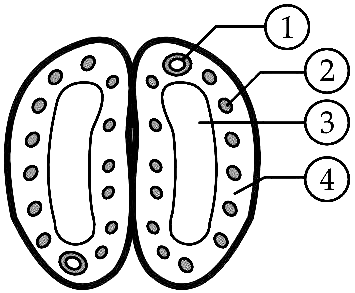
Ans. (b)
Explanation: The label 1 is nucleus, label 2 is chloroplast, label 3 is vacuole and label 4 is guard cell.
Walking in a straight line and riding a bicycle are the activities which are possible due to a part of the brain. Choose the correct location and name of this part from the given table:
Ans. (c)
Explanation: Walking in a straight line and riding a bicycle are voluntary actions and are controlled by cerebellum. Cerebellum controls voluntary actions such as body posture and balance of the body. Involuntary actions such as vomiting, blood pressure are under the control of medulla of hind brain.
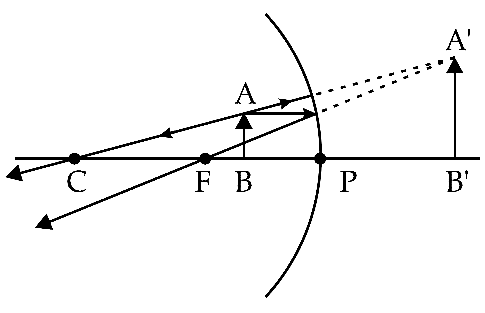
A student wants to obtain an erect image of an object using a concave mirror of 10 cm focal length. What will be the distance of the object from mirror?
Ans. (a)
Explanation: Object distance should be less than the focal length for the formation of an erect image. Hence, the range of distance of object from the mirror should be less than 10 cm i.e., from 0 to 10 cm in the front of mirror from the pole. The nature of image so formed will be virtual and erect.
Bronze is an alloy of:
Ans. (d)
Explanation: Bronze is an alloy of copper and tin.
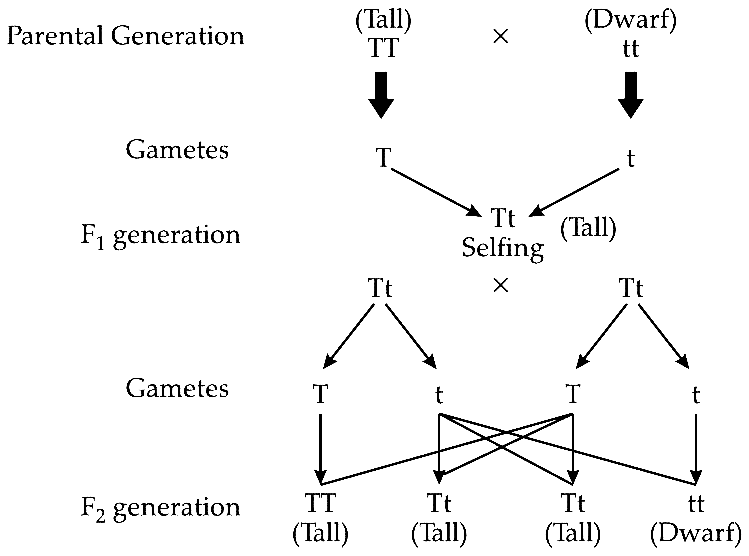
In an experiment with pea plants, a pure tall plant (TT) is crossed with a pure short plant (tt). The ratio of pure tall plant to pure short plants in \(\mathbf{F}_{2}\) generation will be:
Ans. (c)
Explanation: When a pure tall plant (TT) is crossed with the pure short plant (tt), then the progeny in the \(\mathrm{F}_{1}\) generation will be hybrid (Tt). When the \(\mathrm{F}_{1}\) generation is self-crossed (Tt), then in the \(\mathrm{F}_{2}\) generation, the progeny produced will be tall homozygous (TT), Tall heterozygous (Tt), and dwarf homozygous (tt). Hence, the ratio of pure tall plant to pure short plants in \(\mathrm{F}_{2}\) generation will be 1 : 1 (TT : tt)
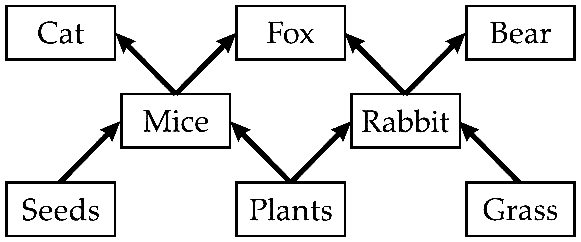
Ans. (d)
Explanation: Primary consumers make up the second trophic level. They are also called herbivores. They eat primary producers. In the given food web, Mice and Rabbit are primary consumers.
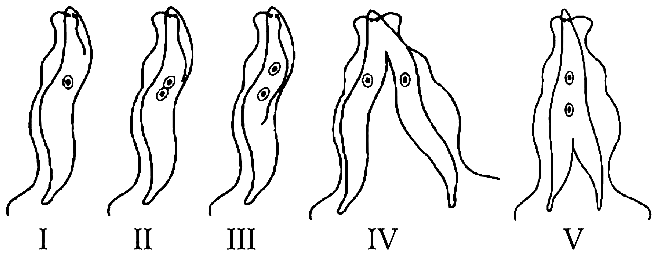
Ans. (b)
Explanation: Leishmania has a whip like structure at one end of the cell. Hence, binary fission occurs in a definite orientation in relation to this structure hence, the correct order of stages of binary fission in Leishmaniasis : I, III, II, V, IV.
Consider the following chemical equations I and II:
I. \(\mathrm{Mg}+2\mathrm{HCl}\rightarrow\mathrm{MgCl}_{2}+\mathrm{H}_{2}\)
II. \(\mathrm{NaOH}+\mathrm{HCl}\rightarrow\mathrm{NaCl}+\mathrm{H}_{2}\mathrm{O}\)
The correct statement about these equations is:
Ans. (b)
Explanation: The chemical equation I represents a displacement reaction. In this, Mg metal displaces hydrogen from HCl. In a displacement reaction, a more reactive element displaces a less reactive element from its salt solution. The chemical equation II is an example of double displacement reaction because both the ions from each of the reactant (NaOH and HCl) are displaced with another reactant.
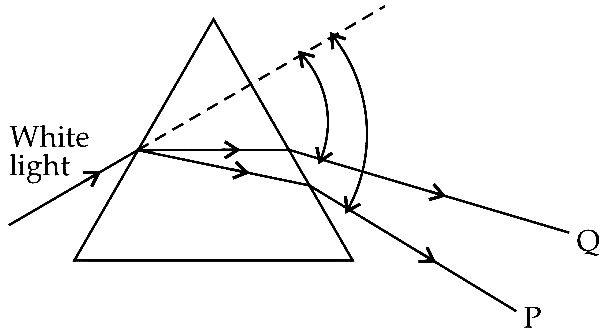
Ans. (b)
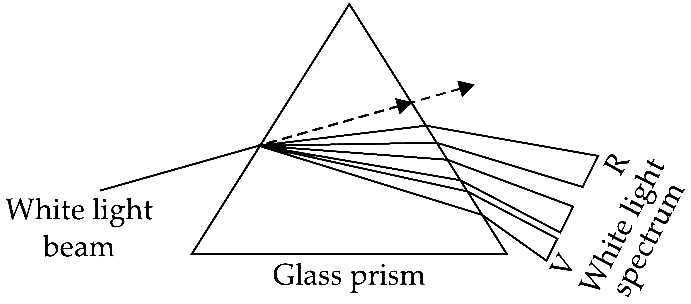
Explanation: The phenomenon of splitting of white light into its seven constituent colours when it passes through a glass prism is called dispersion of white light. The various colours seen are Violet, Indigo, Blue, Green, Yellow, Orange and Red. The different component colour of light bends at a different angle w.r.t the incident angle. The order of deviation of colour from most to least is: Violet > Indigo > Blue > Green > Yellow > Orange > Red Thus, here the colour P is Violet and colour Q is Red.
| Flower X | Flower Y | Flower Z |
 | 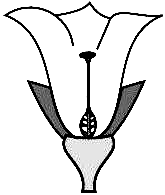 | 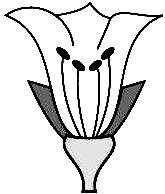 |
Ans. (c)
Explanation: Fertilization occurs inside the ovary female reproductive part (carpel). After fertilization the ovary develops into a fruit In this case, flower Z lacks carpel so it could not develop into fruit. The flowers X and Y would develop into a fruit.
The magnetic field inside a long straight current carrying solenoid:
Ans. (d)
Explanation: The magnetic field inside a long straight solenoid-carrying current is generally the same at all points inside a magnetic field.
In human eye the part which allows light to enter into the eye is:
Ans. (b)
Explanation: The pupil is the opening at the center of the iris through which light passes. Q. No. 17 to 20 are Assertion Reasoning based question: These consists of two statements-Assertion (A) and Reason (R). Answer these questions selecting the appropriate option given below:
(a) Both Assertion (A) and Reason (R) are true and Reason (R) is the correct explanation (A)
(b) Both Assertion (A) and Reason (R) are true but Reason (R) is not the correct explanation of (A).
(c) Assertion (A) is true, but Reason (R) is false.
(d) Assertion (A) is false, but Reason (R) is true.
Assertion (A): It is advised that while diluting an acid one should add water to acid and not acid to water keeping the solution continuously stirred.
Reason (R): The process of dissolving an acid into water is highly exothermic.
Ans. (d)
Explanation: We should add acid to water and not water to acid. It is highly exothermic and may cause burns. Hence, assertion is false but reason is true.
Assertion (A): The energy which passes to the herbivores does not come back to autotrophs.
Reason (R): The flow of energy in a food chain is unidirectional.
Ans. (a)
Explanation: The flow of energy is unidirectional. The energy that is captured by the autotrophs does not revert to the Sun and the energy which passes to the herbivores does not come back to autotrophs. As it moves progressively through the various trophic levels, it is no longer available to the previous level.
Assertion (A): Amoeba takes in food using finger like extensions of the cell surface.
Reason (R): In all unicellular organisms, the food is taken in by the entire cell surface.
Ans. (c)
Explanation: Amoeba takes in food using temporary finger-like extensions of the cell surface, called pseudopodia, which extend and fuse over the food particle forming a food-vacuole. Inside the food vacuole, complex substances are broken down into simpler ones which then diffuse into the cytoplasm. A unicellular organism does not need specific organ for taking in food, because the entire surface of the organism is in contact with the environment.
Assertion (A): Melting point and boiling point of ethanol are lower than that of sodium chloride.
Reason (R): The forces of attraction between the molecules of ionic compounds are very strong.
Ans. (a)
Explanation: The melting point and boiling point of ethanol are indeed lower than that of sodium chloride. This is because ethanol is a covalent compound, while sodium chloride is an ionic compound. Covalent compounds have weaker intermolecular forces than ionic compounds, which mean less energy is required to break the bonds holding the molecules together. Therefore, covalent compounds tend to have lower melting and boiling points than ionic compounds.
(Very Short Answer Questions)
Section B — Very Short Answer
The given reaction is an example of a redox reaction because the oxidation and reduction are taking place simultaneously in the reaction.
(i) \(\mathrm{MnO}_{2}+4 \mathrm{H}^{+}+2 \mathrm{e}^{-} \rightarrow \mathrm{Mn}^{2+}+2 \mathrm{H}_{2} \mathrm{O}\) As you can see in this reaction, \(\mathrm{MnO}_{2}\) is converted to \(\mathrm{Mn}^{2+}\) because addition of electrons takes place in this reaction, hence we can say that \(\mathrm{MnO}_{2}\) is the compound which is reduced.
(ii) Now, \(2 \mathrm{Cl}^{-} \rightarrow \mathrm{Cl}_{2}+2 \mathrm{e}^{-}\) In this reaction, \(\mathrm{Cl}^{-}\)is oxidized to \(\mathrm{Cl}_{2}\) because removal of electrons takes place. Hence, we can say that the compound which is oxidized is HCl.
- List two differences between the movement of leaves of a sensitive plant and the movement of a shoot towards light. 2
OR
(b) What happens at synapse between two neurons? State briefly. 2
The type of movement of leaves of the sensitive plant is known as a nastic movement. This type of movement does not depend on the direction of stimuli. The movement of shoot towards light is known as a tropic movement. This movement depends on the direction of light. This type of movement is directional and growth development. OR Transmission of nerve impulses between two neurons takes place through the synapse. At the end of the axon, the electrical impulse sets off the release of some chemicals called neurotransmitters. These chemicals cross the gap or synapse and start a similar electrical impulse in the dendrite of the next neuron.
Give the name of the enzyme present in the fluid in our mouth cavity. State the gland which produces it. What would happen to the digestion process if this gland stops secreting this enzyme?
Ptyalin or salivary amylase is the starch hydrolyzing enzyme secreted by salivary glands in human beings. Amylase is a digestive enzyme that acts on starch in food, breaking it down into smaller carbohydrate molecules. Without amylase, a person will be unable to digest starch and sugars in the mouth.
Let the resistance of an electrical device remain constant, while the potential difference across its two ends decreases to one fourth of its initial value. What change will occur in the current through it? State the law which helps us in solving the above stated question. 2
From Ohm’s Law:
A light ray enters from medium A to medium B as shown in the figure.
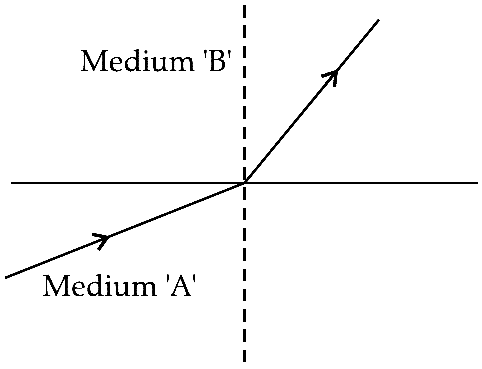
(a) Which one of the two media is denser w.r.t. other medium? Justify your answer. 1
(b) If the speed of light in medium A is \(\mathbf{V}_{\mathbf{A}}\) and the speed of light in medium B is \(\mathbf{V}_{\mathbf{B}}\), what is the refractive index of B with respect to A? 1 OR
(a) A ray of light starting from diamond is incident on the interface separating diamond and water. Draw a labeled ray diagram to show the refraction of light in this case. 1
(b) Absolute refractive indices of diamond and water are 2.42 and 1.33 respectively. Find the value of refractive index of water w.r.t. diamond. 1
- As it is clear from the figure, when the light ray travelled from medium A to medium B, then it bends towards the normal which means that medium B is optically denser than medium A.
(b) Refractive index of medium \(\mathrm{A} \mu_{\mathrm{A}}\) \[ =\frac{\text { Speed of light in vaccum }(c)}{\text { Speed of light in medium } \mathrm{A}\left(v_{\mathrm{A}}\right)} \] Or
(a)
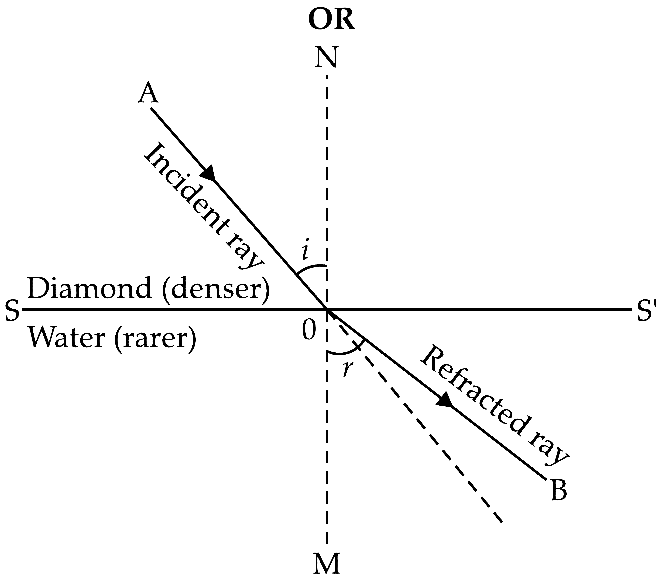
(b) Refractive index of diamond = 2.42 Refractive index of water \(=1.33\)
Refractive index of water w.r.t diamond
State the rule to determine the direction of a (a) magnetic field produced around a straight conductor carrying current and (b) force experienced by a current carrying straight conductor placed in a magnetic field which is perpendicular to it. 2
- Maxwell’s Right-Hand Thumb Rule can be used to determine the direction of magnetic field lines around a current-carrying conductor. It states that, if the thumb of the right hand represents the direction of the current flow, the rest of the curled fingers determine the direction of the magnetic field around it.
(b) Fleming’s left hand rule is used to find the direction of force experienced by a current carrying straight conductor placed in a magnetic field which is perpendicular to it. Fleming’s left-hand rule can be stated as stretching the forefinger, middle finger, and thumb of the left hand such that they are mutually perpendicular to each other. Here, the forefinger indicates the direction of the magnetic field; the middle finger indicates the direction of current in the conductor.
(Short Answer Questions)
Section C — Short Answer
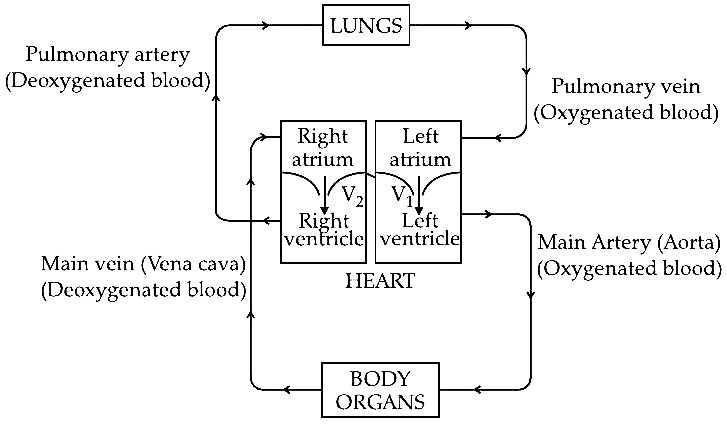
Explain the process of transport of oxygenated and deoxygenated blood in a human body. 3
Pulmonary circulation transports oxygen-poor blood from the right ventricle to the lungs, where blood picks up a new blood supply. Then it returns the oxygen-rich blood to the left atrium. Systemic circulation carries oxygenated blood from the left ventricle, through the arteries, to the capillaries in the tissues of the body. From the tissue capillaries, the deoxygenated blood returns through a system of veins to the right atrium of the heart.
- A substance X is used as a building material and is insoluble in water When it reacts with dil. HCl. it produces a gas which turns lime water milky. 3
(i) Write the chemical name and formula of ‘X’.
(ii) Write chemical equations for the chemical reactions involved in the above statements. OR
(b) A metal ‘M’ on reacting with dilute acid liberates a gas ‘G’. The same metal also liberates gas ‘G’ when reacts with a base. 3
(i) Write the name of gas ‘G’.
(ii) How will you test the presence of this gas?
(iii) Write chemical equations for the reactions of the metal with (1) an acid and (2) a base.
- Substance X is calcium carbonate. Chemical formula: \(\mathrm{CaCO}_{3}\)
(ii) In the reaction between calcium carbonate and dilute hydrochloric acid (HCl), calcium chloride \(\left(\mathrm{CaCl}_{2}\right)\), carbon dioxide \(\left(\mathrm{CO}_{2}\right)\) and water \(\left(\mathrm{H}_{2} \mathrm{O}\right)\) are produced.
(b) (i) Hydrogen gas
(ii) On bringing a burning match stick near the mouth of the test tube, again a pop sound occurs.
(iii) Reaction with acid: \[ \mathrm{Zn}(\mathrm{~s})+2 \mathrm{HCl}(\mathrm{aq}) \rightarrow \mathrm{ZnCl}_{2}(\mathrm{aq})+\mathrm{H}_{2}(\mathrm{~g}) \] Reaction with base:
- Name the gland and the hormone secreted by it in scary situations in human beings. List any two responses shown by our body when this hormone is secreted into the blood. 3 OR
(b) In the given diagram 3
(i) Name the parts labelled A, B, and C,
(ii) Write the functions of A and C.
(iii) Reflex arcs have evolved in animals? Why?
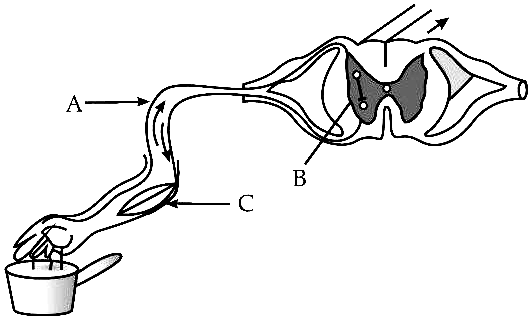
Gland: Adrenal gland
Hormone: Adrenaline
Functions:
– Increases the heart rate.
– Increases blood pressure.
– Expands the air passages of the lungs.
– Enlarges the pupil in the eye. (Any two)
OR
(b) (i) A – Sensory neuron
B – Relay neuron
C – Effector (Muscle in arm)
(ii) Function of part A- Sensory neuron carries impulses from the receptor to the CNS (spinal cord). Function of part C: An effector is a part of the body which can respond to a stimulus according to the instructions sent from the nervous system (spinal cord and brain). The effectors are mainly the muscles and glands of our body.
(iii) Reflex arc, have evolved in animals, in order to perform quick responses, as the thinking process of brain is not fast enough.
With the help of an appropriate example, justify that some of the chemical reactions are determined by 3
(a) Change in temperature,
(b) Evolution of a gas, and
(c) Change in colour Give chemical equation for the reaction involved in each case.
- Change in temperature: When zinc reacts with sulphuric acid, the test tube in which the reaction is taking place will be hot, indicating that the temperature is rising during the reaction. \[ \mathrm{Zn}(\mathrm{~s})+\mathrm{H}_{2} \mathrm{SO}_{4}(\mathrm{aq}) \rightarrow \mathrm{ZnSO}_{4}(\mathrm{aq})+\mathrm{H}_{2}(\mathrm{~g}) \]
(b) Evolution of gas: The chemical reaction between zinc and dilute sulphuric acid is characterized by the evolution of hydrogen gas. On bring a burning matchstick near the gas jar if it burns with a pop sound, the presence of hydrogen gas is confirmed. \[ \mathrm{Zn}(\mathrm{~s})+\mathrm{H}_{2} \mathrm{SO}_{4}(\mathrm{aq}) \rightarrow \mathrm{ZnSO}_{4}(\mathrm{aq})+\mathrm{H}_{2}(\mathrm{~g}) \]
(c) Change in colour: The reaction between lead nitrate solution and potassium iodide solution. In this reaction colour changes from colourless to yellow.
State reasons for Myopia. With the help of ray diagrams, show the 3
(a) image formation by a myopic eye, and
(b) correction of myopia using an appropriate lens.
Myopia may arise due to: excessive curvature of the eye lens, or (ii) elongation of the eyeball.
(a) This defect can be corrected by using a concave lens of suitable power.
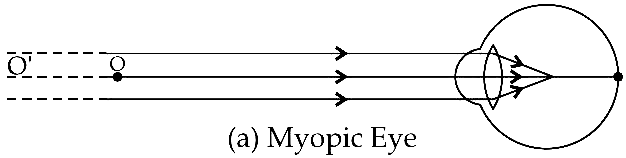
(b)
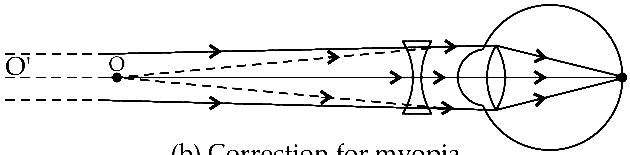
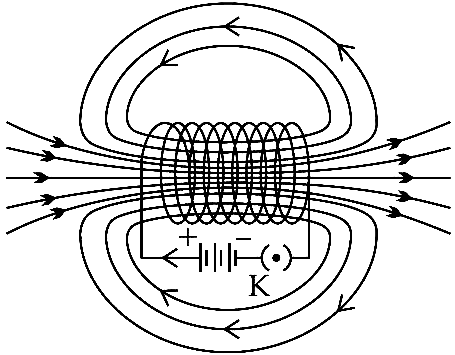
What is a solenoid? When does a solenoid behave as a magnet? Draw the pattern of the magnetic field produced inside it showing the directions of the magnetic field lines. 3
A solenoid is a long coil containing a large number of close turns of copper wire wounded on any insulator. A solenoid acts as a magnet when a current is supplied through it.
- Write the percentage of (i) solar energy captured by the autotrophs and (ii) energy transferred from autotrophs to the next level in a food chain. 3
(b) What are trophic levels? Why do different food chains in an ecosystem not have more than four to five trophic levels? Give reason.
- The autotrophs capture about 1% of the solar energy that falls on their leaves for the process of photosynthesis.
(ii) According to “The 10% Rule” , there is only 10% flow of energy from one trophic level to the next higher level so, only 10% energy will get transferred from autotrophs to the herbivores.
(b) Trophic level: The various steps in a food chain or ecological pyramid, at which the transfer of food (or energy) takes place from one organism to another organism is known as trophic levels. There is only 10% flow of energy from one trophic level to the next higher level. The loss of energy at each step is so large that very little usable energy remains after four or five trophic levels. Hence, only 4 to 5 trophic levels are present in each food chain.
(Long Answer Questions)
Section D — Long Answer
- A compound “A” with a molecular formula of \(\mathrm{C}_{2} \mathrm{H}_{4} \mathrm{O}_{2}\) reacts with a base to give salt and water. Identify ‘A’, state its nature and the name of the functional group it possesses. Write chemical equation for the reaction involved. 5
(ii) When the above stated compound ‘A’ reacts with another compound ‘B’ having molecular formula \(\mathbf{C}_{\mathbf{2}} \mathbf{H}_{\mathbf{6}} \mathbf{O}\) in the presence of an acid, a sweet smelling compound ‘C’ is formed.
(1) Identify ‘B’ and ‘C’.
(2) State the role of acid in this reaction.
(3) Write chemical equation for the reaction involved.
OR
(b) (i) Name the compound formed when ethanol is heated at 443 K in the presence of conc. \(\mathbf{H}_{\mathbf{2}} \mathbf{S O}_{\mathbf{4}}\) and draw its electron dot structure. State the role of conc. \(\mathbf{H}_{\mathbf{2}} \mathbf{S O}_{\mathbf{4}}\) in this reaction. 5
(ii) What is hydrogenation? Explain it with the help of a chemical equation. State the role of this reaction in industry.
- Compound A- Acetic acid/ \(\mathrm{CH}_{3}
\mathrm{COOH}\) Nature: Its nature is acidic. Name of the
functional group: COOH Chemical equation: \[ \begin{array}{r} \mathrm{CH}_{3} \mathrm{COOH}(\mathrm{aq})+\mathrm{NaOH}(\mathrm{aq}) \rightarrow \mathrm{CH}_{3} \mathrm{COONa}(\mathrm{aq}) \\ +\mathrm{H}_{2} \mathrm{O}(\mathrm{l}) \end{array} \]
- Compound A- Acetic acid/ \(\mathrm{CH}_{3}
\mathrm{COOH}\) Nature: Its nature is acidic. Name of the
functional group: COOH Chemical equation:
(ii) (1) B – Ethanol \(\left(\mathrm{C}_{2} \mathrm{H}_{5} \mathrm{OH}\right)\) C – Ethyl acetate
(2) Role of acid: It is a catalyst which will speed up the process and esterification will proceed speedily and complete on time.
(3) Chemical equation:
(b) (i) Ethyl alcohol is converted into Ethene by heating Ethyl alcohol \(\left(\mathrm{C}_{2} \mathrm{H}_{5} \mathrm{OH}\right)\) ) in the presence of concentrated Sulphuric acid \(\left(\mathrm{H}_{2} \mathrm{SO}_{4}\right)\). The chemical reaction is as follows:
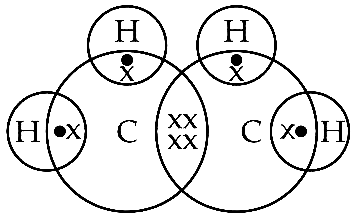
Role of Conc. \(\mathbf{H}_{\mathbf{2}} \mathbf{S O}_{\mathbf{4}}\) : Concentrated sulphuric acid (conc. \(\mathrm{H}_{2} \mathrm{SO}_{4}\) ) acts as a dehydrating agent in the conversion from ethanol to ethene . It helps in removing water molecule.
(ii) Hydrogenation: The process in which unsaturated compounds reacts with hydrogen in the presence of nickel (as a catalyst) to form saturated compounds are called hydrogenation.
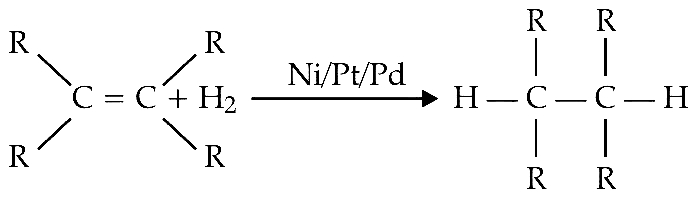
Role in industry: This reaction is commonly used in the hydrogenation of vegetable oils. Vegetable oils have long unsaturated carbon chains, which are converted into vegetable ghee i.e., saturated fatty acids.
Give reason for the following: 5
(a) During reproduction inheritance of different proteins will lead to altered body designs.
(b) Fertilization cannot take place in flowers if pollination does not occur.
(c) All multicellular organisms cannot give rise to new individuals through fragmentation or regeneration.
(d) Vegetative propagation is practised for growing only some type of plants.
(e) The parents and off-springs of organisms reproducing sexually have the same number of chromosomes.
- During reproduction, the information for inheritance of characteristics is passed on from the parents to the offsprings in the form of DNA. DNA in the cell nucleus carry the genetic information. Hence DNA copying is the basic event in reproduction. If the information during the DNA copying is changed, different proteins will be made. Different proteins will eventually lead to altered body designs.
(b) The process of fertilisation is the fusion of both male and female gametes. If pollination does not occur it means that the male gamete is not available, hence fertilization cannot take place.
(c) Regeneration and fragmentation is only possible when the entire body part is made up of similar kind of cells. All multicellular organisms cannot give rise to new individuals through fragmentation or regeneration because the complex multicellular organisms have organ system level organization. The tissues in these organisms are highly differentiated to perform specialized functions and cannot regenerate a new individual.
(d) Vegetative propagation is practiced for growing some types of plants because of following advantages:
– It is used to grow a plant in which viable seeds are not formed or very few seeds are produced such as orange, banana, pineapple.
– It helps to introduce plants in new areas where the seed germination fails to produce mature plant due to change in environmental factors and the soil.
– It is more rapid, easier and cheaper method.
– By this method a good quality of a race or variety can be preserved. (Any two)
(e) Gametes of sexually-reproducing animals have half the number of chromosomes as that of the parents. During fertilisation, when two gametes i.e. male and female gametes fuse, the offspring produced will have the same amount of DNA or the same number of chromosomes as that of the parent.
- What is meant by resistance of a conductor? Define its SI unit. 5
(ii) List two factors on which the resistance of a rectangular conductor depends.
(iii) How will the resistance of a wire be affected if its.
(1) length is doubled, and
(2) radius is also doubled ?
Give justification for your answer. OR
(b) In an electric circuit three bulbs of 100 W each are connected in series to a source. In another circuit set of three bulbs of the same wattage are connected in parallel to the same source. 5
(i) Will the bulb in the two circuits glow with the same brightness? Justify your answer.
(ii) Now, let one bulb in both the circuits get fused. Will the rest of the bulbs continue to glow in each circuit ? Give reason for your answer.
- Resistance is defined as the property of a conductor to resist the flow of charges through it. The resistance of a conductor is numerically given as the ratio of the potential difference across its length to the current flowing through it. Its SI unit is ohm The resistance of a conductor is said to be 1 ohm if a current of 1 ampere flows through it when the potential difference across it is 1 volt.
(b) (ii) Resistance of a conductor depends on:
(1) Length of the conductor.
(2) Area of cross section of the conductor. \(\frac{1}{2}+\frac{1}{2}\)
(iii) (1) Resistance is directly proportional to the length. Hence, if length is doubled, resistance is also doubled.
(2) The resistance of a wire is inversely proportional to the area of cross-section the wire. Thus, if the radius is doubled, the area increases four times and hence the resistance becomes one-fourth.
When both changes occur together, \(R’=\rho\frac{2l}{4A}=\frac{R}{2}\). Hence, the final resistance is half the original resistance.
OR
(b) Case (1):
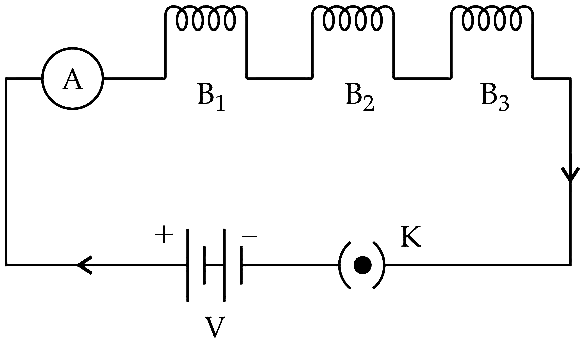
Case (2):
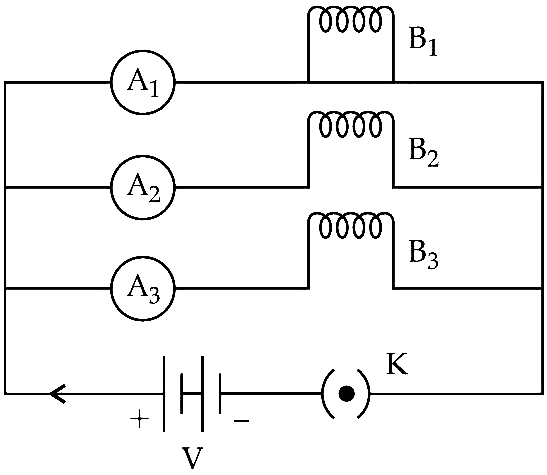
(i) Let us assume that resistance of each bulb is Rand the source of voltage is V. Case (1) Series combination \[ \mathrm{R}_{e q u}=\mathrm{R}+\mathrm{R}+\mathrm{R}=3 \mathrm{R} \] Current in each bulb \((\mathrm{I})=\frac{\mathrm{V}}{3 \mathrm{R}}\) Case (2)Parallel combination \[ \text { Net current }\left(\mathrm{I}_{\text {equ }}\right)=\frac{3 \mathrm{~V}}{\mathrm{R}} \] Current will get equally divided in three bulbs (I) \[ =\frac{\mathrm{I}_{e q u}}{3}=\frac{3 \mathrm{~V}}{\mathrm{R} \times 3}=\frac{\mathrm{V}}{\mathrm{R}} \] As, Power \((\mathrm{P})=\frac{\mathrm{V}^{2}}{\mathrm{R}}\) therefore P is inversely proportional to R. Hence, bulbs in case (2) will glow with great brightness as because power of each bulb in parallel is 9 times that of each bulb in series
(ii) In case (1), if one bulb gets fused, rest of bulbs will not glow because in series circuit the voltage across the circuit is the sum of the voltages across each bulb. But in case (2), parallel combination, the voltage across each bulb is the same so, all other bulbs will glow as voltage eruption in the fused bulb does not affect the voltage of other bulbs.
Section E — Case / Source Based
On the basis of reactivity metals are grouped into three categories: 4
(i) Metals of low reactivity
(ii) Metal of medium reactivity
(iii) Metals of high reactivity Therefore metals are extracted in pure form from their ores on the basis of their chemical properties. Metals of high reactivity are extracted from their ores by electrolysis of the molten ore. Metals of low reactivity are extracted from their sulphide ores, which are converted into their oxides.
The oxides of these metals are reduced to metals by simple heating.
(a) Name the process of reduction used for a metal that gives vigorous reaction with air and water both
(b) Carbon cannot be used as a reducing agent to obtain aluminium from its oxide? Why?
(c) Describe briefly the method to obtain mercury from cinnabar. Write the chemical equation for the reactions involved in the process.
OR
(c) Differentiate between roasting and calcination giving chemical equation for each.
- Electrolytic reduction The metal is likely to be Sodium (Na). It has very much affinity to oxygen. So, reducing agents like carbon and aluminum can’t be used.
(b) Because aluminium has greater affinity for oxygen than for carbon, therefore carbon cannot reduce alumina \(\left(\mathrm{Al}_{2} \mathrm{O}_{3}\right)\) to aluminium.
(c) Cinnabar (HgS-mercury (II) sulphide or mercury sulphide) is an ore of mercury. It is heated in air to give mercuric oxide (HgO). Mercuric oxide is further heated to get mercury. The reactions involved are,
All human chromosomes are not paired. Most Human Chromosomes have a maternal and a paternal copy and we have 22 such pairs. But one pair sex chromosomes is odd in not always being a perfect pair. Women have a perfect pair of sex chromosomes. But man have a mismatched pair in which one is normal sized while the other is a short one. 4
(a) In humans, how many chromosomes are present in a zygote and in each gamete.
(b) A few reptiles rely entirely on environmental cues for sex determinations. Comment.
(c) The sex of a child is a matter of chance and none of the parents are considered to be responsible for it.” Justify it through flow chart only.
OR
(c) Why do all the gametes formed in human females have an X chromosome ?
- Zygote is formed due to the fusion of male and female gametes. Gametes are haploid cells. Thus
fusion of two haploid cells results in the formation of a diploid cell. Therefore zygote is a diploid cell with 46 chromosomes, while each gamete has 23 chromosomes.
(b) In a few reptiles, the temperature at which fertilised eggs are kept determines whether the animals developing in eggs will be male or female. By this we can say that some animals rely entirely on environmental cues for sex determination.
(c) There is equal chance of fusion of either X or Y chromosome with the egg. So, we can say that the sex of new born child is a matter of chance and none of the parent is responsible for it.
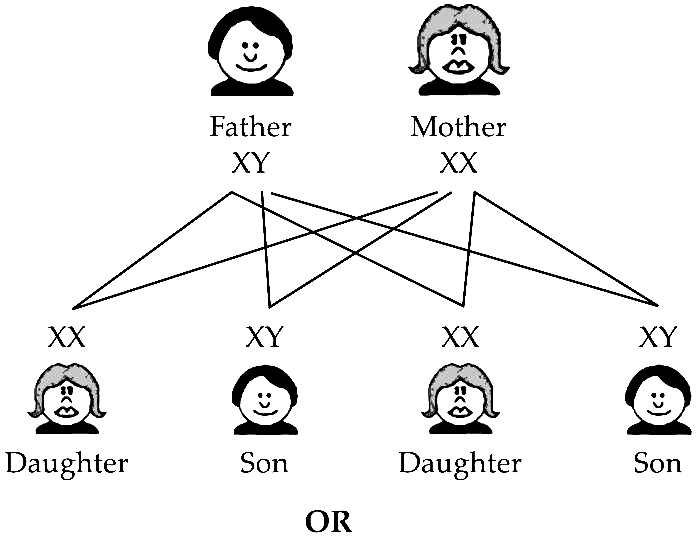
Human females are homomorphic. They have two sex chromosomes that are identical. One X-chromosome enters each gamete during meiosis at the time of gamete formation. So, all gametes have an X-chromosome.
Student took three concave mirrors of different focal lengths and formed the experiment to see the image formation by placing an object different distances with these mirrors as shown in the following table:
| Case No. | Object-distance | Focal length |
| I. | 45 cm | 20 cm |
| II. | 30 cm | 15 cm |
| III. | 20 cm | 30 cm |
Now answer the following questions:
(a) List two properties of the image formed in Case I.
(b) In which one of the cases given in the table the mirror will form real image of same size and why ?
(c) Name the type of mirror used by dentists. Give reason why do they use such type of mirrors.
OR
(c) Look at the table and identify the situation (object distance and focal length) which resembles the situation in which concave mirrors are used as shaving mirrors? Draw a ray diagram to show the image formation in this case.
- In case I, image is formed between F and C. It is real, inverted, and smaller in size.
(b) In Case II, since, the object is placed at centre of curvature.
(c) Dentists use concave mirrors to see teeth and other areas in the mouth. This is because a concave mirror forms a virtual, erect and enlarged image when the object is placed within focus. OR In case III can be used as having mirror because, when object is placed between P and F, we get virtual, erect and magnified image.